What Is a Blood Moon?
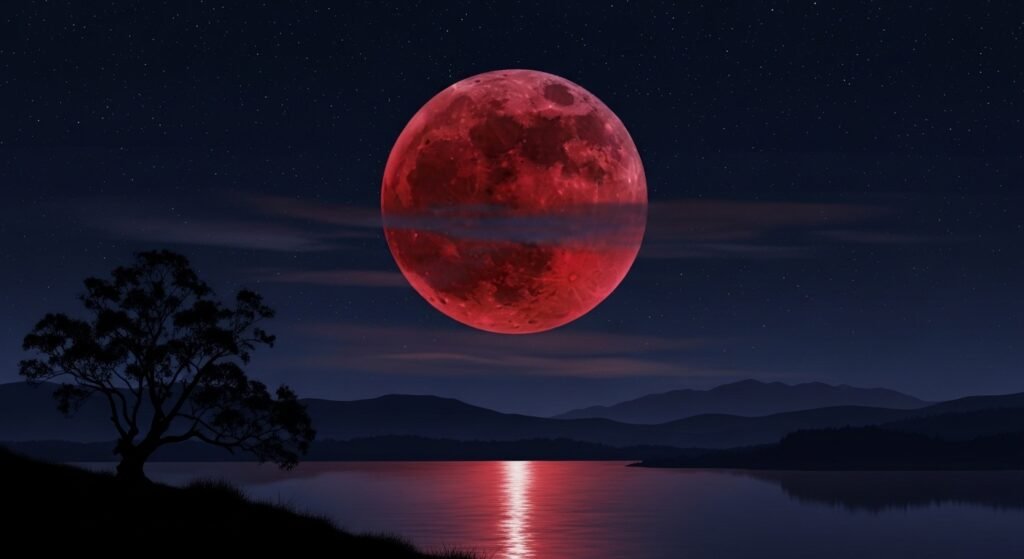
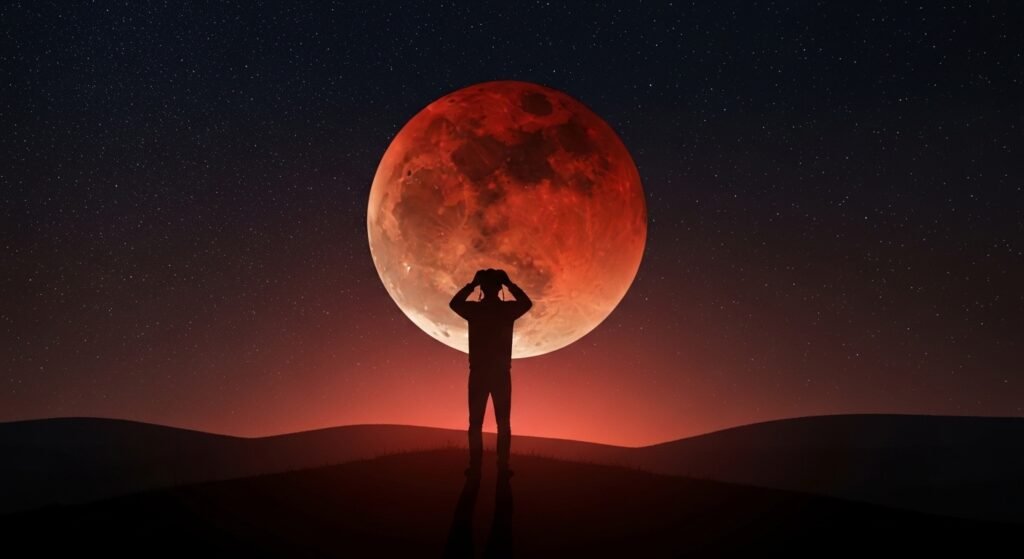
Have you ever looked up at the night sky and seen the Moon glowing a deep copper or crimson red? That eerie, dramatic sight is what people commonly call a blood moon. Despite the ominous name, the phenomenon is actually a beautiful and completely natural astronomical event. A blood moon occurs during a total lunar eclipse, when the Earth moves directly between the Sun and the Moon, casting its shadow across the lunar surface. Instead of disappearing completely, the Moon takes on a reddish hue that can range from soft orange to dark crimson.
The term “blood moon” isn’t an official scientific classification used by astronomers. Instead, it’s a popular nickname inspired by the striking color the Moon appears to take on during the eclipse. According to astronomical explanations, the Moon glows red because sunlight passes through Earth’s atmosphere before reaching it, filtering out blue wavelengths and allowing red light to dominate the lunar surface.
People across cultures have been captivated by this rare celestial display for thousands of years. Ancient civilizations often interpreted blood moons as supernatural signs or omens, believing they foretold war, disaster, or major cosmic events. Today, however, scientists understand the physics behind the phenomenon and see it as a predictable and fascinating alignment of celestial bodies. The dramatic color, slow transformation, and cosmic mechanics behind a blood moon make it one of the most breathtaking events you can observe in the night sky.
Understanding the Blood Moon Phenomenon
The Simple Definition of a Blood Moon
At its core, a blood moon simply describes the Moon’s reddish appearance during a total lunar eclipse. During this event, the Earth sits directly between the Sun and the Moon, blocking most sunlight from reaching the lunar surface. If the Moon were illuminated only by direct sunlight, it would vanish into darkness. Yet something remarkable happens instead—the Moon glows a haunting red.
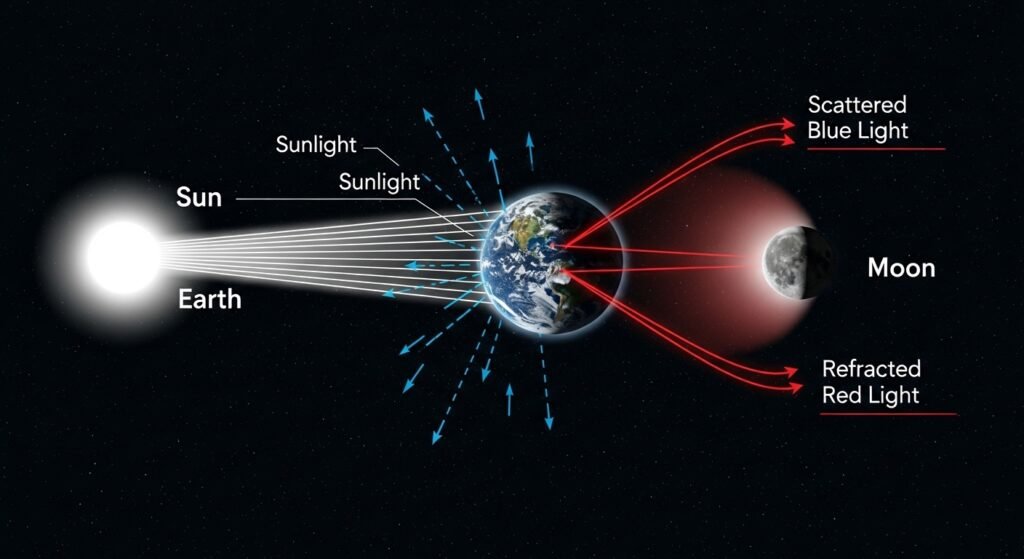
This occurs because Earth’s atmosphere bends and filters sunlight as it passes around the planet’s edges. Imagine every sunrise and sunset happening simultaneously around the Earth’s horizon. That reddish sunlight is refracted toward the Moon, bathing it in warm tones that give it the famous “blood” appearance.
Interestingly, the color of a blood moon is not always the same. Sometimes it appears bright orange or copper, while other times it looks dark red or even brownish. The exact shade depends largely on the condition of Earth’s atmosphere at the time. Dust, smoke, pollution, or volcanic ash can influence how much light passes through and what color ultimately reaches the Moon.
Because the Moon doesn’t produce its own light but instead reflects sunlight, the eclipse temporarily changes how that sunlight reaches it. The result is a celestial spectacle that slowly unfolds over several hours, giving observers plenty of time to enjoy the transformation.
Why the Moon Turns Red
To understand why the Moon turns red during a blood moon, you need to look at the behavior of light as it passes through Earth’s atmosphere. Sunlight is made up of many colors, each with different wavelengths. Shorter wavelengths, such as blue and violet, scatter more easily when they collide with particles in the atmosphere. Longer wavelengths, like red and orange, travel more directly.
This scattering effect—known as Rayleigh scattering—is the same phenomenon that makes the sky appear blue during the day and causes sunsets to glow red or orange. When sunlight passes through Earth’s atmosphere during a lunar eclipse, most of the blue light gets scattered away, leaving predominantly red wavelengths to continue onward.
That remaining red light bends around Earth’s edges and illuminates the Moon even while it sits in Earth’s shadow. From our perspective on Earth, the Moon appears to glow with a haunting reddish color rather than disappearing entirely. It’s almost as if the entire planet’s atmosphere acts like a giant filter projecting warm hues onto the lunar surface.
The deeper the Moon moves into Earth’s shadow, the more dramatic the red coloration becomes. During the peak of the eclipse—called totality—the Moon may appear deep crimson or coppery red, creating the iconic “blood moon” moment skywatchers love to photograph.
The Science Behind a Blood Moon
The Role of a Total Lunar Eclipse
A blood moon cannot happen without a total lunar eclipse, one of the most impressive alignments in our solar system. During this event, three celestial bodies line up almost perfectly: the Sun, Earth, and Moon. The Earth sits directly between the Sun and the Moon, casting a large shadow that falls across the lunar surface.
Normally, the Moon shines brightly because it reflects sunlight. But when the Earth blocks that sunlight, the Moon enters the darkest part of Earth’s shadow, known as the umbra. This is when the dramatic transformation begins. Instead of fading completely into darkness, the Moon gradually shifts from its familiar silver glow to shades of copper, orange, and deep red.
Unlike solar eclipses—which can only be seen from narrow paths on Earth—lunar eclipses are visible across large portions of the planet wherever the Moon is above the horizon. That means millions of people can witness a blood moon simultaneously. This accessibility makes lunar eclipses some of the most widely observed astronomical events.
Alignment of the Sun, Earth, and Moon
The precise alignment required for a blood moon doesn’t happen every full moon. The Moon’s orbit around Earth is slightly tilted relative to Earth’s orbit around the Sun. Because of this tilt, the Moon usually passes slightly above or below Earth’s shadow during a full moon.
Only when the Moon crosses the plane of Earth’s orbit at exactly the right moment does it pass directly through the shadow. When that happens, the conditions for a total lunar eclipse—and therefore a blood moon—are perfectly met.
Types of Lunar Eclipses
Not every lunar eclipse produces a blood moon. Astronomers categorize lunar eclipses into three main types depending on how deeply the Moon enters Earth’s shadow.
Total Lunar Eclipse
A total lunar eclipse is the event that produces a true blood moon. During this type of eclipse, the entire Moon passes through Earth’s umbra, the darkest central part of the shadow. As the Moon moves deeper into the shadow, it gradually darkens and then glows red due to atmospheric filtering of sunlight.
This phase—called totality—is when the Moon appears most dramatically red and is often the highlight of the entire event. Totality can last from several minutes to over an hour, depending on the exact alignment of celestial bodies.
Partial Lunar Eclipse
In a partial lunar eclipse, only part of the Moon enters Earth’s umbra. Instead of turning fully red, a noticeable dark shadow appears across the lunar surface. Observers can watch the shadow slowly move across the Moon before eventually receding.
While partial eclipses are still fascinating to watch, they usually don’t produce the dramatic crimson glow associated with a blood moon.
Penumbral Lunar Eclipse
A penumbral lunar eclipse is the most subtle type. During this event, the Moon passes through the outer part of Earth’s shadow, called the penumbra. Instead of a strong shadow, the Moon only appears slightly dimmer than usual.
Many people don’t even notice penumbral eclipses unless they know exactly when to look and compare the brightness of the Moon throughout the event.
How Often Do Blood Moons Occur?
Frequency of Total Lunar Eclipses
Blood moons may look rare, but they actually occur more frequently than most people think. On average, Earth experiences one to three lunar eclipses each year, though not all of them are total eclipses. Only when a lunar eclipse becomes total does the Moon display the classic blood-red appearance.
Even when a total lunar eclipse occurs, it isn’t visible everywhere on Earth. The event can only be seen from locations where the Moon is above the horizon at the time. That means some regions might see several blood moons within a few years, while others might miss them entirely.
What Is a Lunar Tetrad?
Sometimes lunar eclipses occur in a fascinating pattern known as a lunar tetrad. This happens when four consecutive total lunar eclipses occur within about two years, each spaced roughly six months apart.
These sequences are relatively uncommon and tend to generate significant excitement among astronomers and skywatchers. During a tetrad, observers may witness four blood moons in succession, creating a rare opportunity to study and photograph the phenomenon multiple times.
Cultural and Historical Meanings of Blood Moons
Ancient Civilizations and Lunar Omens
Long before modern astronomy explained lunar eclipses, ancient civilizations viewed blood moons with fear and fascination. When the Moon suddenly turned red, people believed supernatural forces were at work. In some cultures, it was thought that mythical creatures were devouring the Moon.
For example, the ancient Mesopotamians believed lunar eclipses signaled danger for their kings. Rituals were sometimes performed to protect rulers from perceived cosmic threats. Similarly, some Indigenous cultures believed that a blood moon indicated a celestial battle between heavenly bodies.
Without scientific knowledge, the sudden change in the Moon’s appearance must have seemed terrifying. Imagine looking up at the sky thousands of years ago and watching the Moon slowly transform into a deep red orb—it would certainly feel like a message from the universe.
Religious and Mythological Interpretations
Blood moons also appear in various religious texts and prophecies. Some interpretations of biblical passages refer to the Moon turning to blood as a symbolic sign of dramatic events or divine intervention. These interpretations fueled modern speculation during certain eclipse cycles, especially when multiple blood moons appeared close together.
Despite these dramatic interpretations, astronomers emphasize that blood moons are entirely natural events with predictable cycles. They pose no danger to Earth and are simply a beautiful result of celestial mechanics.
How to Watch a Blood Moon
Best Time and Conditions for Viewing
Watching a blood moon is one of the easiest astronomical experiences you can enjoy. Unlike solar eclipses, which require protective eyewear, lunar eclipses are completely safe to view with the naked eye. All you need is a clear night sky and patience.
The best viewing conditions occur when the Moon is high in the sky and far from light pollution. Rural areas, mountains, and open landscapes provide the clearest views. Checking local weather forecasts ahead of time is also essential because clouds can easily obscure the event.
Equipment for the Best Experience
Although no equipment is required, certain tools can enhance the experience:
- Binoculars – reveal surface details and color variations.
- Telescopes – allow closer observation of lunar craters during totality.
- Cameras with tripods – perfect for capturing long-exposure eclipse photos.
Many astrophotographers spend months preparing for blood moon events because the dramatic lighting creates stunning photographs.
Blood Moon vs Other Moon Phenomena
Blood Moon vs Harvest Moon
A harvest moon refers to the full moon closest to the autumn equinox. It often appears slightly orange because of atmospheric effects near the horizon, but it has nothing to do with eclipses.
Blood Moon vs Blue Moon
A blue moon simply refers to the second full moon within a single calendar month. Despite the name, the Moon does not actually turn blue during this event.
These names illustrate how many cultural labels humans have given the Moon over time.
Why Blood Moons Fascinate Humanity
There’s something deeply captivating about watching the Moon change color before your eyes. Unlike meteor showers that flash by in seconds, a blood moon unfolds slowly, allowing people to witness cosmic mechanics in real time. Over the course of several hours, the familiar bright Moon gradually darkens, then glows red, and eventually returns to its usual brilliance.
This transformation reminds us that Earth, the Moon, and the Sun are constantly moving in a complex dance through space. Even though the science behind the event is well understood today, the emotional impact remains powerful. Standing under the night sky while the Moon turns crimson can make anyone feel connected to the vast universe.
Conclusion
A blood moon is one of the most spectacular astronomical events visible from Earth. It occurs during a total lunar eclipse, when Earth’s shadow covers the Moon and sunlight filtered through our atmosphere bathes it in red hues. The effect is created by the scattering of shorter wavelengths of light and the bending of red wavelengths toward the lunar surface.
While ancient cultures often viewed blood moons as omens, modern science reveals them to be predictable and harmless cosmic alignments. They occur several times each decade and can be observed safely without special equipment. Whether you’re an experienced astronomer or simply someone who enjoys gazing at the night sky, witnessing a blood moon is an unforgettable reminder of the beauty and complexity of our universe.
FAQs
1. Is a blood moon rare?
Blood moons are not extremely rare. Total lunar eclipses occur roughly every couple of years, though visibility depends on your location.
2. Why doesn’t the Moon disappear during a lunar eclipse?
Even though Earth blocks direct sunlight, some light bends through Earth’s atmosphere and reaches the Moon, giving it a red glow instead of total darkness.
3. Can you look at a blood moon without protection?
Yes. Lunar eclipses are completely safe to watch with the naked eye, binoculars, or telescopes.
4. How long does a blood moon last?
The total red phase, called totality, can last from a few minutes to over an hour, while the entire eclipse event may last several hours.
5. What color is a blood moon exactly?
The Moon can appear copper, orange, brown, or deep red depending on atmospheric conditions like dust, smoke, or volcanic ash.