Blood Moon vs Supermoon: What Is the Difference?
Look up at the night sky long enough, and you’ll eventually notice something interesting—the Moon doesn’t always look the same. Sometimes it appears unusually large and bright, while other times it glows with an eerie reddish color. These dramatic changes lead to two commonly discussed lunar events: the blood moon and the supermoon. Although people often confuse them, they are actually caused by completely different astronomical processes.
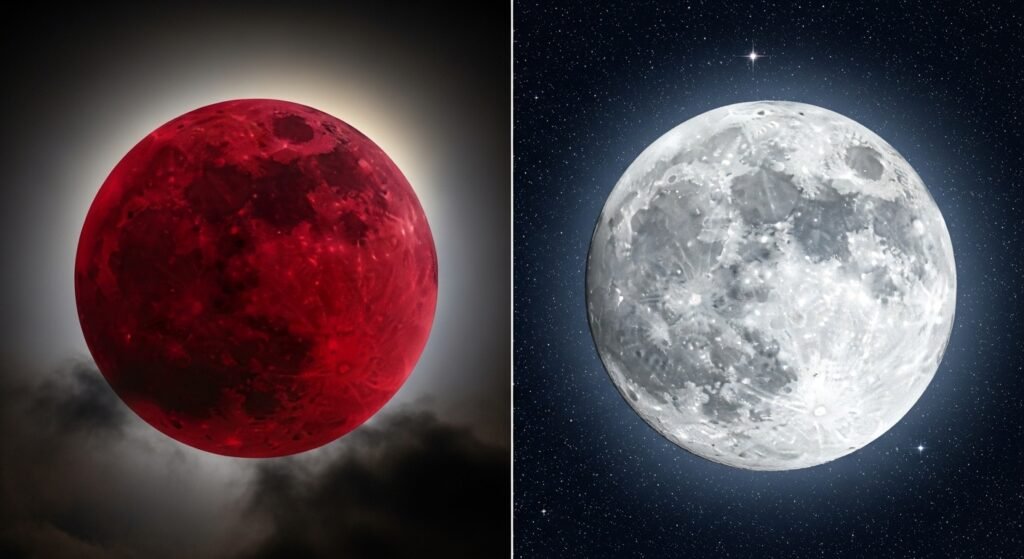
A blood moon occurs during a total lunar eclipse, when the Earth moves directly between the Sun and the Moon. The Earth’s shadow falls across the Moon, and sunlight passing through our planet’s atmosphere filters out shorter wavelengths of light, leaving red tones that illuminate the lunar surface. This atmospheric filtering creates the famous reddish color that gives the blood moon its name.
A supermoon, on the other hand, has nothing to do with eclipses or shadows. It occurs when the full moon aligns with the Moon’s closest point in its orbit around Earth, known as perigee. At that moment, the Moon appears slightly larger and brighter than usual when viewed from Earth. The difference might seem subtle at first glance, but astronomers estimate that a supermoon can appear about 14% larger and up to 30% brighter than a typical full moon.
Both events are spectacular to witness, but they represent entirely different cosmic mechanics. Understanding how and why they happen can make observing the night sky even more fascinating.
Understanding the Basics of Moon Events
Why the Moon Appears Different at Times
The Moon may seem constant when you glance at it casually, but in reality, it is constantly changing its appearance due to several factors. The Moon’s orbit around Earth, the position of the Sun, and atmospheric conditions all influence how we see it from the ground. These factors create different phases of the Moon, occasional eclipses, and variations in brightness and apparent size.
One of the most important concepts to understand is that the Moon’s orbit is not a perfect circle. Instead, it follows a slightly oval-shaped path called an elliptical orbit. Because of this shape, the Moon sometimes travels closer to Earth and sometimes farther away. This changing distance is what makes supermoons possible.
Another key factor is alignment. When the Sun, Earth, and Moon align in specific ways, eclipses can occur. If the alignment happens during a full moon and the Moon passes directly through Earth’s shadow, we see a lunar eclipse that can produce a blood moon.
These two factors—distance and alignment—are the main reasons the Moon sometimes looks dramatically different from one night to another.
How Orbital Mechanics Affect the Moon
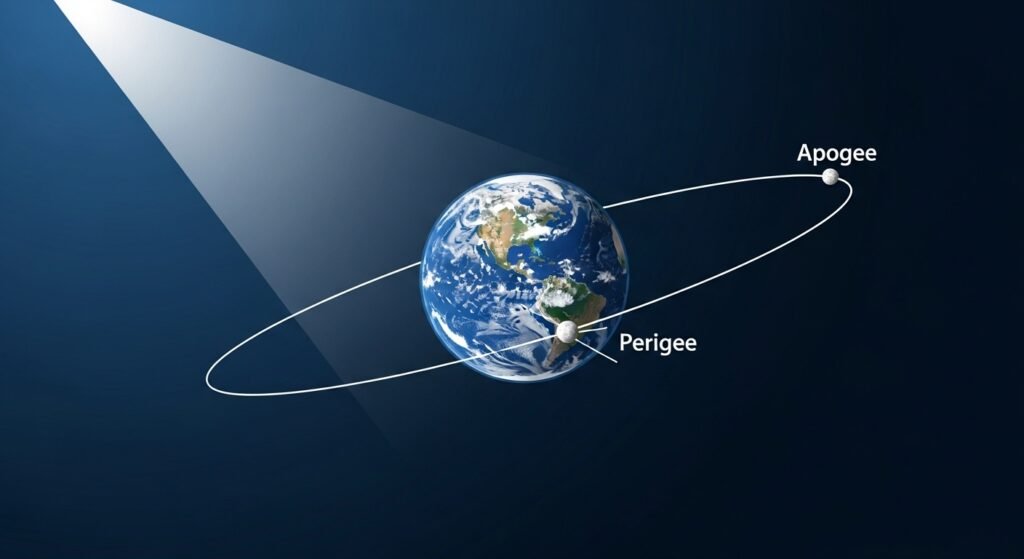
The Moon orbits Earth at an average distance of about 384,400 kilometers (238,855 miles). However, this distance varies by roughly 50,000 kilometers due to the elliptical orbit. When the Moon reaches the closest point to Earth in its orbit, astronomers call it perigee. The farthest point is called apogee.
When a full moon happens near perigee, we get a supermoon. Because the Moon is physically closer to us, it appears larger and brighter in the sky. Conversely, when a full moon occurs near apogee, the Moon may appear slightly smaller than average.
Eclipses, however, depend on alignment rather than distance. The Moon’s orbit is tilted about 5 degrees relative to Earth’s orbit around the Sun, which means perfect alignment doesn’t occur every month. Only when the Moon crosses the plane of Earth’s orbit during a full moon can a lunar eclipse happen.
These orbital mechanics explain why blood moons and supermoons occur independently most of the time.
What Is a Blood Moon?
The Science Behind a Blood Moon
A blood moon happens during a total lunar eclipse, when the Earth moves directly between the Sun and the Moon and blocks sunlight from reaching the lunar surface. As the Moon enters Earth’s shadow, it gradually darkens until it reaches the deepest part of the shadow, called the umbra.
Instead of disappearing completely, the Moon turns red. This surprising effect occurs because sunlight bends through Earth’s atmosphere before reaching the Moon. The atmosphere filters out blue wavelengths and allows red wavelengths to pass through, projecting a warm reddish glow onto the lunar surface.
Interestingly, the exact shade of red can vary widely. Some eclipses produce a bright copper-colored Moon, while others create a darker, almost brownish hue. Factors such as dust, pollution, and volcanic ash in Earth’s atmosphere can influence the intensity of the color.
The total phase of a lunar eclipse—the moment when the Moon is fully inside Earth’s shadow—is when the blood moon effect becomes most dramatic.
Total Lunar Eclipse Explained
A total lunar eclipse unfolds slowly, often lasting several hours from beginning to end. The process typically follows several stages:
- The Moon enters Earth’s outer shadow (penumbra).
- A dark shadow begins creeping across the Moon.
- The Moon becomes fully engulfed in Earth’s shadow.
- The reddish color intensifies during totality.
- The shadow gradually moves away as the eclipse ends.
Unlike solar eclipses, lunar eclipses are safe to watch without protective glasses. Anyone on the nighttime side of Earth can observe them if the sky is clear.
Why the Moon Turns Red
The red color of a blood moon comes from a phenomenon known as atmospheric scattering. The same process causes sunsets and sunrises to appear red or orange.
When sunlight passes through Earth’s atmosphere, shorter wavelengths like blue scatter in different directions. Longer wavelengths, like red, travel more directly through the atmosphere. During a lunar eclipse, the only sunlight reaching the Moon has already passed through Earth’s atmosphere and been filtered by this scattering effect.
The result is a glowing red Moon that looks almost otherworldly.
What Is a Supermoon?
The Moon’s Elliptical Orbit
A supermoon occurs when a full moon coincides with the Moon’s closest approach to Earth in its orbit. Because the Moon’s orbit is elliptical rather than perfectly circular, its distance from Earth changes throughout the month.
At perigee, the Moon is roughly 363,300 kilometers (225,623 miles) from Earth. When a full moon occurs near this point, the Moon appears noticeably larger and brighter in the sky. The term “supermoon” was popularized by astrologer Richard Nolle in 1979, although astronomers usually refer to the event simply as a perigee full moon.
While the difference in size might not be obvious to everyone, photographers and skywatchers often notice the brighter glow and slightly larger lunar disk.
Why a Supermoon Looks Larger and Brighter
When the Moon is closer to Earth, it reflects more sunlight toward our planet. This makes it appear up to 30% brighter than the dimmest full moons of the year. The increased brightness can make landscapes look dramatically illuminated, almost like natural nighttime floodlighting.
The illusion of a larger Moon near the horizon—known as the Moon illusion—can make supermoons look even more impressive. When the Moon rises or sets near buildings, mountains, or trees, our brains interpret it as being larger than it actually is.
This combination of physical proximity and visual illusion often makes supermoons one of the most photographed lunar events.
Key Differences Between a Blood Moon and a Supermoon
| Cause | Total lunar eclipse | Moon at closest point to Earth |
| Appearance | Red or copper colored | Larger and brighter than usual |
| Alignment Required | Sun, Earth, Moon in straight line | Full moon near perigee |
| Frequency | Occurs during total lunar eclipses | Several times per year |
| Visibility | Seen across nighttime side of Earth | Visible wherever the full moon rises |
Cause of the Phenomenon
The biggest difference between the two events lies in what causes them. A blood moon is caused by Earth’s shadow during a lunar eclipse, while a supermoon occurs because the Moon is physically closer to Earth in its orbit.
Appearance in the Night Sky
A blood moon stands out because of its dramatic color. A supermoon, by contrast, looks larger and brighter but retains the Moon’s usual silvery-white color.
Frequency of Occurrence
Supermoons are relatively common and typically occur three to four times per year. Blood moons depend on total lunar eclipses, which occur less frequently.
When a Supermoon Becomes a Blood Moon
The Rare Super Blood Moon
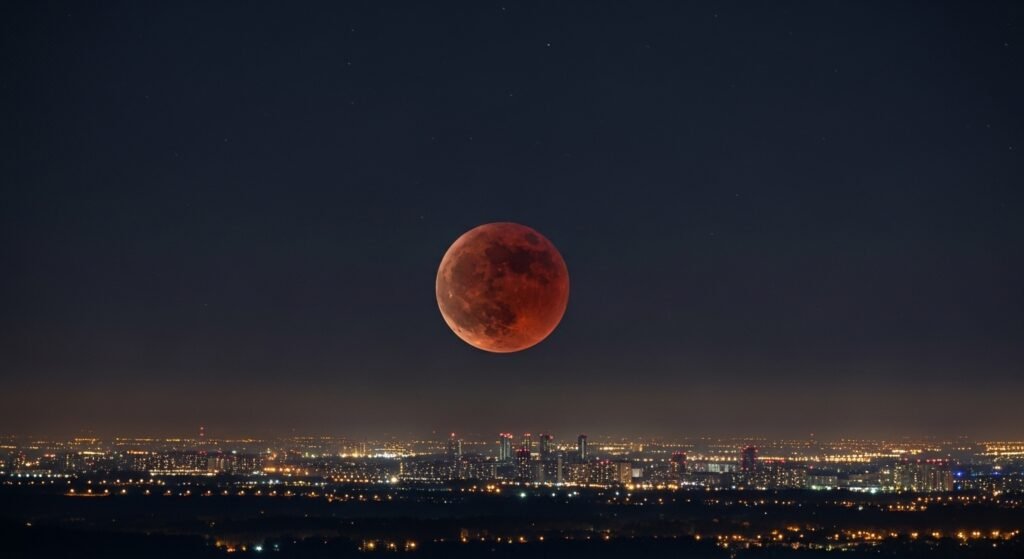
Occasionally, a remarkable event happens when a total lunar eclipse occurs during a supermoon. This creates what is often called a super blood moon. During this event, the Moon appears both larger than usual and glowing red at the same time.
These events are rare because they require two separate astronomical conditions to occur simultaneously: a total lunar eclipse and the Moon being at or near perigee. When they do occur, they attract massive global attention from astronomers and skywatchers alike.
A super blood moon combines the best features of both phenomena—size, brightness, and dramatic color—making it one of the most visually stunning celestial events.
Cultural Meanings and Myths
Throughout history, unusual lunar events have inspired myths, legends, and superstitions. Blood moons were often interpreted as signs of impending change or supernatural events. Some cultures believed that celestial creatures were attacking the Moon during an eclipse.
Supermoons also captured the imagination of ancient observers. Their brightness made them stand out dramatically compared to other full moons, leading to stories about divine power or cosmic influence.
Today, scientists understand these events through astronomy rather than mythology. Even so, the emotional impact of seeing the Moon change so dramatically still inspires awe.
How to Observe Both Events
Watching a blood moon or supermoon doesn’t require expensive equipment. In fact, both events are easily visible to the naked eye.
To improve your viewing experience:
- Find a dark location away from city lights.
- Check weather forecasts for clear skies.
- Use binoculars or a telescope for better detail.
- Bring a camera and a tripod if you want to take photographs.
Patience is key, especially during lunar eclipses, since the transformation happens slowly over several hours.
Why These Lunar Events Fascinate Skywatchers
The Moon is Earth’s closest celestial neighbor, and its changes are easy for anyone to observe. Unlike distant planets or galaxies, lunar events happen right above us and unfold in real time. Watching a blood moon or supermoon reminds us that we are part of a dynamic cosmic system.
These events also connect us with generations of observers who looked up at the same sky thousands of years ago. Whether viewed through modern telescopes or with the naked eye, the Moon continues to inspire curiosity, wonder, and scientific exploration.
Conclusion
A blood moon and a supermoon are two fascinating lunar events that often capture global attention. While they may sound similar, they are caused by completely different astronomical processes. A blood moon occurs during a total lunar eclipse when Earth’s shadow turns the Moon red, while a supermoon happens when the Moon is at its closest point to Earth and appears larger and brighter.
Both events offer stunning views of the night sky and remind us how dynamic our solar system truly is. Occasionally, the two phenomena even occur together, creating the rare and spectacular super blood moon. Whether you’re a casual skywatcher or a dedicated astronomy enthusiast, witnessing these events can be an unforgettable experience.
FAQs
1. Can a blood moon and supermoon happen at the same time?
Yes. When a total lunar eclipse occurs during a supermoon, it creates a rare event called a super blood moon.
2. Which is rarer: a blood moon or a supermoon?
Blood moons are rarer because they require a total lunar eclipse, while supermoons happen several times each year.
3. Do supermoons affect tides?
Yes. Because the Moon is closer to Earth during a supermoon, its gravitational pull slightly increases ocean tides, creating what are called perigean spring tides.
4. Are blood moons dangerous?
No. Blood moons are completely natural astronomical events and pose no danger to Earth.
5. Do you need special equipment to see these events?
No. Both blood moons and supermoons can be viewed safely with the naked eye, though binoculars or telescopes can enhance the experience.
Did you find the differences between a blood moon and a supermoon fascinating? Interestingly, these lunar variations are closely linked to the dramatic events that shaped our planet during its formation. Check out our [Story on Early Earth’s Second Moon and Quasi-Satellites] to explore deeper scientific secrets hidden within the Moon’s origins.