
What Is the Gemini Constellation? A Simple Guide for Global Stargazers
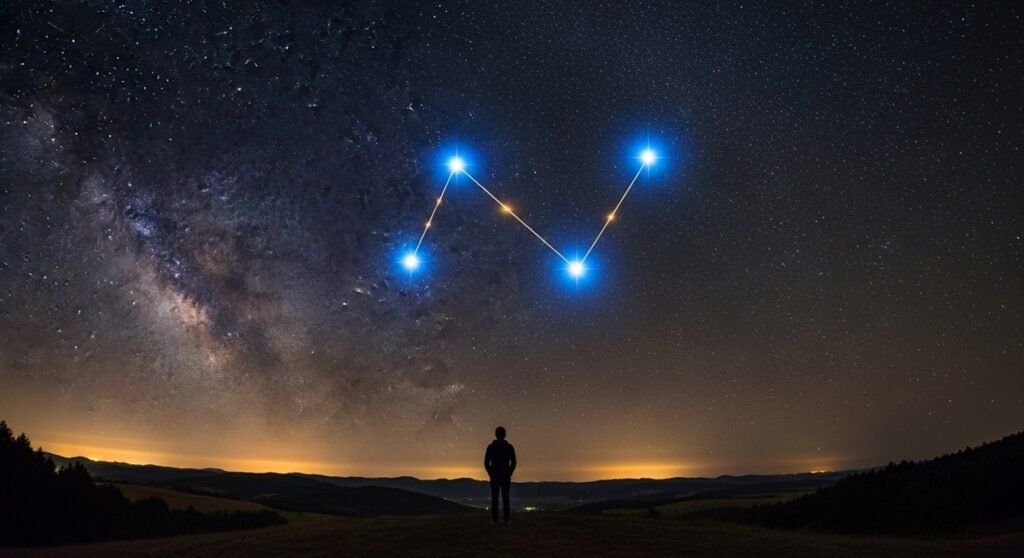
If you’ve ever looked up at the night sky and noticed two bright stars sitting side by side, you may have already spotted Gemini, one of the most recognizable constellations. Known as “The Twins,” Gemini is easy to find, rich in mythology, and packed with fascinating stars and deep-sky objects—making it perfect for beginners.
Let’s break it down in a simple, friendly way so you can understand—and actually find—it tonight, whether you’re in the Northern or Southern Hemisphere.
🌟 What Is the Gemini Constellation?
Gemini is one of the 88 official constellations used by astronomers today. Its name comes from Latin, meaning “twins.”
The constellation represents two brothers standing side by side in the sky. Once you know what to look for, Gemini becomes one of the easiest constellations to recognize. It lies along the zodiac, which means the Sun, Moon, and planets all pass through this region of the sky at different times of the year.
Tip from the Backyard: Think of Gemini as a cosmic signpost—it helps you navigate the sky and locate other nearby constellations like Taurus and Cancer.
👬 The Story Behind Gemini (The Twins)
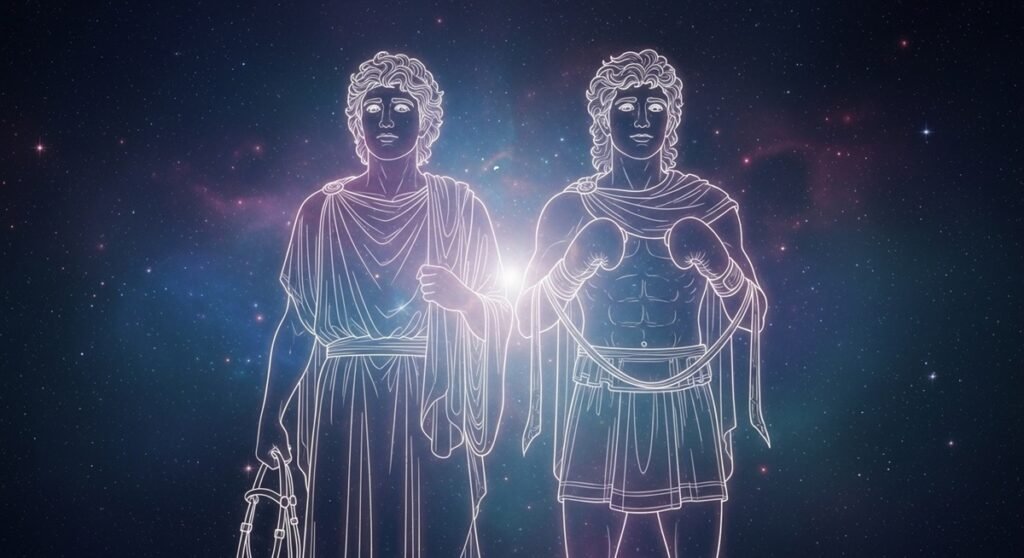
In ancient mythology, Gemini represents the twin brothers Castor and Pollux. Their story is one of loyalty and brotherhood. Pollux was immortal, while Castor was not. When Castor died, Pollux was so heartbroken that he asked the gods to let them stay together forever.
The result? They were placed in the sky as the Gemini constellation—side by side for eternity. When you look at Gemini, you’re seeing that story frozen in the stars.
📍 Where Is Gemini in the Sky? (Global View)
Gemini is a constellation of the Northern Celestial Hemisphere, but it is visible from almost every part of the world.
- For Northern Hemisphere Observers (USA, UK, Europe): Gemini appears high in the southern sky during winter evenings. If you face south, look up—it sits above and to the left of the brilliant constellation Orion.
- For Southern Hemisphere Observers (Australia, NZ, South Africa): Gemini appears in your northern sky. From Queensland, Australia, it sits lower toward the northern horizon. Interestingly, the “Twins” will appear upside down compared to how they look in the North, but those two bright stars are still unmistakable!
Use these famous neighbors as your guide:
- Orion: Use the “Belt” of three stars to point the way.
- Taurus: Look for the bright red eye of the Bull (Aldebaran) nearby.
⭐ The Brightest Stars: Meet the Twins
Gemini is famous for its two anchor stars that represent the heads of the twins.
- 🌟 Pollux – The Brightest Twin: Pollux is the brightest star in Gemini and has a warm orange-yellow glow. It’s a giant star and even has its own confirmed exoplanet!
- 🌟 Castor – The Complex Twin: While it looks like one star, Castor is actually a six-star system. Through a decent telescope, you can often split it into two or three distinct points of light.
🔭 What Can You See with Binoculars or a Telescope?
Gemini isn’t just about the “stick figures”—it’s home to some stunning deep-sky treasures.
- Messier 35 (M35): A massive star cluster that looks like a shimmering patch of light. Even with a pair of 10×50 binoculars, it’s a breathtaking sight.
- The Eskimo Nebula (NGC 2392): For those with a telescope, this planetary nebula looks like a tiny face wearing a furry parka. It’s a favorite for astrophotographers!
🔍 How to Find Gemini (Step-by-Step)
- Find Orion first: Look for Orion’s Belt (the three stars in a row).
- Draw an imaginary line: Follow a line from Orion’s “feet” (Rigel) up through his “shoulders” (Betelgeuse).
- Spot the Twins: Continue that line until you see two bright, equal-sized stars glowing near each other. Those are Castor and Pollux.
🌠 Fun Facts About Gemini
- Meteor Showers: Gemini is the radiant point for the Geminids, one of the best meteor showers of the year (usually peaking in mid-December).
- Distance: Pollux is relatively close to us—only about 34 light-years away!
- Orientation: Because of Earth’s tilt, the twins “stand” in the North but “hang” in the South.
🌌 Conclusion
Gemini is more than just a group of stars—it’s a story, a guide, and a gateway into the wonders of astronomy. Whether you’re in the suburbs of Brisbane or the dark skies of London, spotting the Twins is a “win” that every beginner stargazer should experience.
Ready to see more? If you’re looking for the best way to see the “Six-star system” of Castor, check out our guide on the [Best Beginner Telescopes for 2026].
❓ FAQs
1. Is Gemini easy to find? Yes! Once you find Orion, it’s just a short skip to the left (or north).
2. What does Gemini mean? It’s Latin for “Twins,” representing the brothers Castor and Pollux.
3. When is the best time to see it? Ideally from December to April, with peak visibility in January and February.